

In a world buzzing with chaos, who wouldn’t want a slice of serenity right at home? Enter Zen home design—a delightful blend of simplicity and tranquility that transforms living spaces into personal sanctuaries. Imagine stepping into your abode and feeling like you’ve just traded the hustle and bustle for a peaceful retreat. That’s the magic of Zen.
This design philosophy isn’t just about aesthetics; it’s about creating an atmosphere that promotes relaxation and mindfulness. With clean lines, natural materials, and a splash of greenery, Zen home design invites calmness and clarity into everyday life. So why not swap those cluttered corners for a serene oasis? After all, if your living room feels like a spa day, who needs a vacation? Let’s dive into the principles that can turn any home into a tranquil haven.
What Is Zen Home Design?
Zen home design promotes creating tranquil living spaces that inspire peace and clarity. This design approach emphasizes simplicity, focusing on essential elements rather than excessive decoration. It draws inspiration from Japanese aesthetics, which incorporate natural materials like wood, stone, and bamboo. Clean lines and uncluttered spaces play pivotal roles in establishing a calming environment.
Natural light enhances the atmosphere, facilitating relaxation and mindfulness. Open layouts allow for easy movement and flow, which creates a sense of expansiveness. Plants and greenery contribute to this design by improving air quality and connecting the indoors with nature.
Color palettes in Zen home design tend to be soft and neutral, featuring whites, greys, and earthy tones. These hues promote tranquility and serve as a backdrop for personal expression through art and decor. Minimalist furnishings, characterized by their functional beauty, reduce visual noise and foster a serene ambiance.
Incorporating elements like water features or meditation areas deepens the sense of calm and promotes mindfulness. Each piece of furniture often carries significance, serving a purpose while enhancing the overall harmony of the space. Thoughtfully selected lighting can also add warmth, encouraging relaxation during evenings.
Lastly, Zen home design cultivates a sanctuary where individuals can unwind and recharge. Prioritizing simplicity, nature, and mindfulness, it transforms living spaces into peaceful retreats, essential for balancing the chaos of daily life.
Key Principles of Zen Home Design
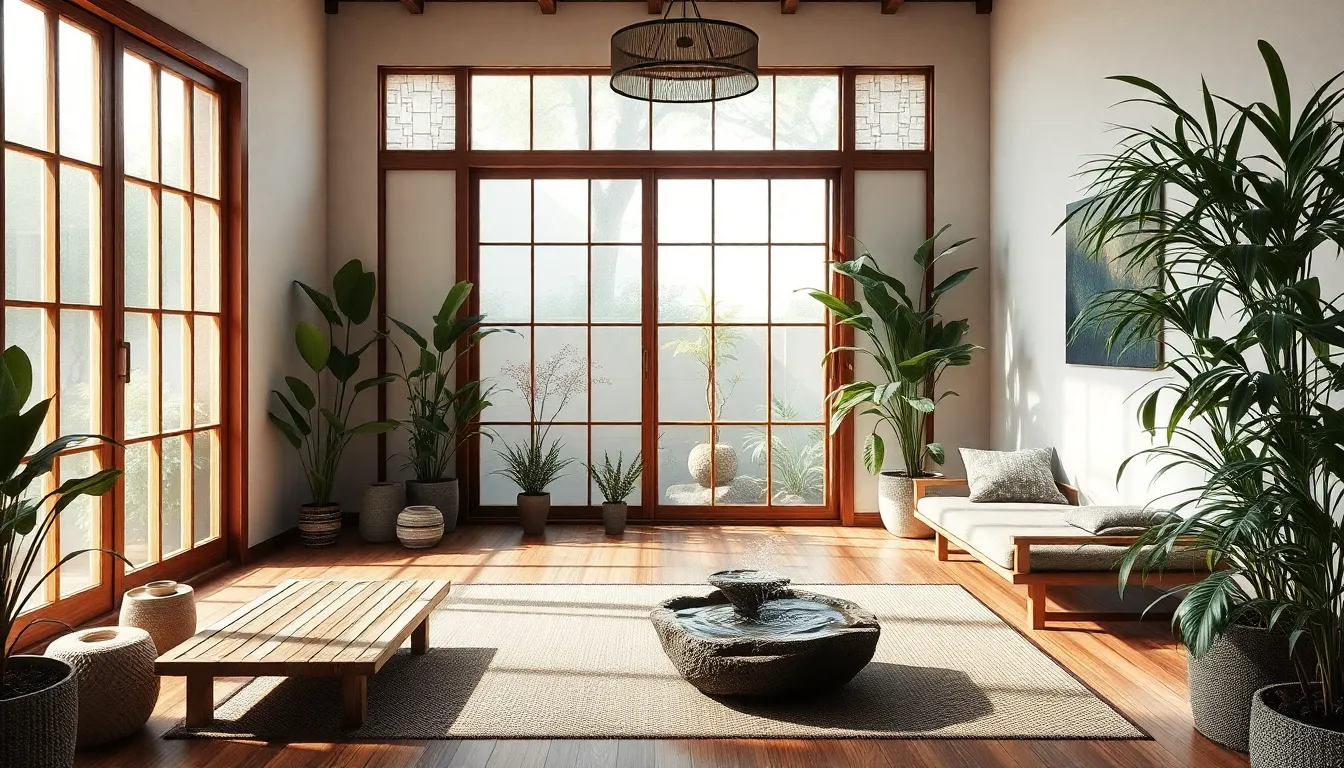
Zen home design emphasizes creating spaces that embody tranquility and mindfulness. It integrates simplicity, natural elements, and harmony for a serene environment.
Simplicity and Minimalism
Simplicity serves as the foundation of Zen design. It prioritizes essential pieces, avoiding clutter that detracts from peace. Minimalism invites open spaces that allow for easy movement and mental clarity. Thoughtful selections of furniture and decor enhance the overall space, ensuring every item has purpose. Unadorned surfaces create visual calm, making it easier to unwind. Spaces often feature fewer, larger pieces rather than numerous small items, reinforcing the concept of “less is more.” Clean lines in design contribute to a structured yet relaxed atmosphere.
Natural Elements
Natural elements play a crucial role in Zen home design. Incorporating materials like wood, stone, and bamboo fosters a connection with nature. Each material brings warmth and organic texture, anchoring spaces in the natural world. Indoor plants enhance air quality while providing a sense of life and vibrancy. Utilizing large windows allows abundant natural light to flood in, promoting a feeling of openness. Designs often feature water elements such as small fountains to add soothing soundscapes. Sunlight and greenery combine to promote both relaxation and well-being, elevating the home’s atmosphere.
Harmony and Balance
Harmony and balance are essential in Zen design. They cultivate a sense of equilibrium within spaces. The arrangement of furniture and decor encourages flow, making movement in the home feel seamless. Symmetry also plays a role, with furnishings and elements positioned to create visual balance. Each color and texture harmonizes with others, contributing to a cohesive design language. Spaces evoke calm through intentionality, where every choice aligns with the principles of Zen. Achieving this balance often involves thoughtful placement of art, lighting, and decorative pieces that enhance overall tranquility.
Benefits of Zen Home Design
Zen home design offers numerous advantages, focusing on creating peaceful and rejuvenating environments. This design philosophy significantly impacts mental wellbeing and aesthetics.
Mental Wellbeing
Reduction of stress often results from a serene living space. Calmness manifests through simple designs that encourage mindfulness. Clutter-free environments promote clarity of thought, allowing occupants to unwind fully. Natural elements, including plants and light, contribute to improved air quality and mood. Routine meditation or reflection spaces within homes foster emotional balance. Engaging with nature through design cultivates a sense of connection. All these elements together support overall mental health and emotional resilience.
Enhanced Aesthetics
Visual appeal arises from minimalism and thoughtful design choices. Soft, neutral color palettes create inviting atmospheres. Clean lines and open spaces reduce visual noise, contributing to a harmonious look. Natural materials like wood and stone enhance beauty while remaining functional. Intentional placement of each piece allows for an engaging flow throughout the home. Integrating plants not only beautifies but also connects occupants with nature. Overall, these aesthetic principles promote environments that feel both serene and stylish.
Tips for Incorporating Zen Home Design
Incorporating Zen home design into a living space requires thoughtful choices and a clear vision. Harmony thrives in simplicity, so focusing on essential elements ensures a calming environment.
Choosing the Right Colors
Soft, neutral colors dominate Zen design palettes. These shades, such as whites, beiges, and light grays, promote tranquility. Earth tones evoke natural elements, fostering a sense of calm. Accent hues may also provide subtle warmth, allowing for personal expression. Each color selected should tie into a serene atmosphere, supporting relaxation and mindfulness.
Furniture Selection
Selecting minimalist furniture enhances the simplicity central to Zen design. Streamlined pieces prioritize functionality and elegance, reducing visual clutter. Natural materials like wood and bamboo contribute to a serene environment. Consider larger, fewer furnishings to maintain open space and encourage movement. Each piece should serve a purpose, ensuring intentionality in the design process.
Creating Zen Spaces
Creating dedicated Zen spaces builds an atmosphere of peace. Meditation corners allow for focused mindfulness, while inviting plants enhance the connection to nature. Soft lighting promotes relaxation during quiet moments. Arrange furnishings to foster balance and flow, preventing over-crowdedness. Each element should purposefully contribute to the overall calming experience within the home.
Zen home design offers a pathway to tranquility in an often chaotic world. By embracing simplicity and natural elements, individuals can transform their spaces into serene retreats that promote relaxation and mindfulness. The intentional arrangement of furnishings and the use of soft color palettes create an inviting atmosphere that enhances mental wellbeing.
Incorporating Zen principles into home design not only elevates aesthetics but also fosters a deeper connection with nature. Each choice made in the design process contributes to a harmonious environment, allowing for clarity and peace. Ultimately, adopting this design philosophy can lead to a more balanced and rejuvenating living experience.

