
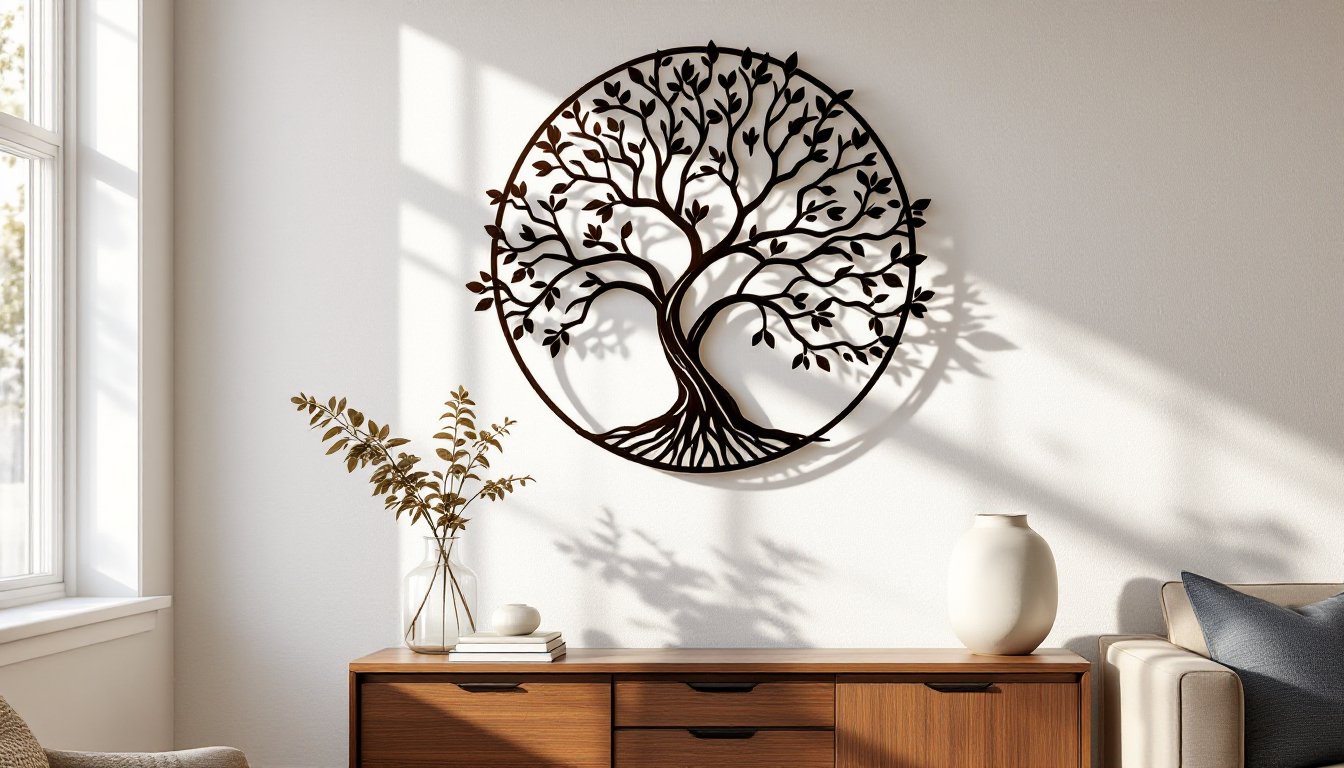
Tree of life metal wall decor has become one of the most sought-after statement pieces in home design, and it’s easy to see why. This symbolic art form combines meaningful imagery with durable materials, offering homeowners a piece that’s both decorative and enduring. Unlike canvas prints or paper art that fade or tear, metal wall decor stands up to time while adding dimensional interest to any room. Whether someone’s updating a living room, creating a focal point in an outdoor space, or adding personality to a hallway, tree of life designs offer versatility that works with nearly any decorating style, from farmhouse rustic to industrial modern.
Table of Contents
ToggleKey Takeaways
- Tree of life metal wall decor combines symbolic meaning with durability, making it a versatile statement piece that works across farmhouse, industrial, and modern design styles without fading or requiring glass protection.
- Metal construction resists warping and humidity better than wood or fabric, making it ideal for moisture-prone areas like patios, bathrooms, and basements, while its three-dimensional quality casts dynamic shadows that add depth throughout the day.
- Proper sizing is critical—wall art should cover two-thirds to three-quarters of furniture width, and pieces ranging from 24–36 inches suit standard 8-foot ceilings, while 48-inch installations work best with vaulted or 10-foot ceilings.
- Installation success depends on locating wall studs and using weight-appropriate hardware; pieces under 5 pounds can use standard anchors, but heavier metal wall art requires wood screws, toggle bolts, or lag bolts secured to studs.
- Tree of life designs span multiple styles—from modern minimalist with clean lines to rustic hand-forged pieces and industrial raw steel—with finish options like powder-coated, bronze, or patina determining both aesthetics and outdoor durability.
- Maintenance is straightforward for indoor pieces (light dusting), while outdoor metal wall decor requires annual inspections, touch-up paint for chips, and quarterly rinsing in coastal environments to prevent rust and salt damage.
What Makes Tree of Life Metal Wall Art So Popular?
The tree of life symbol carries weight across cultures, representing growth, strength, and interconnectedness. That universal appeal translates into a decor piece that feels personal without being overly specific to one design trend.
From a practical standpoint, metal construction offers serious advantages. Steel, wrought iron, and aluminum resist warping, don’t require glass protection, and handle humidity better than wood or fabric art. For homes with moisture-prone areas, covered patios, bathrooms, or basements, metal is often the smarter choice.
The three-dimensional quality sets metal wall art apart from flat prints. Laser-cut or hand-forged tree designs cast shadows that shift with natural light throughout the day, adding depth without requiring additional lighting. Powder-coated or patina finishes provide texture that photographs can’t replicate.
Another factor: metal tree designs scale well. A 24-inch piece works above a console table, while a 48-inch or larger installation can anchor an entire wall. The open, branching design doesn’t overwhelm a space the way a solid piece might, making it easier to integrate into existing layouts.
Finally, these pieces bridge indoor and outdoor spaces. Weather-resistant metal art extends living areas onto porches, garden walls, or fence sections, creating visual continuity between interior and exterior design.
Choosing the Right Tree of Life Metal Wall Decor for Your Home
Size and Placement Considerations
Measure twice, buy once. Before ordering, measure the wall space and mark it with painter’s tape to visualize scale. A common mistake is going too small, a 20-inch piece on a 10-foot wall looks lost. As a guideline, wall art should cover roughly two-thirds to three-quarters the width of the furniture beneath it, or span 4–8 feet for a standalone statement wall.
Consider ceiling height, too. Standard 8-foot ceilings pair well with pieces in the 24–36 inch range. Vaulted or 10-foot ceilings can handle 48-inch or larger installations. Leave 6–12 inches of space between the top of furniture and the bottom of the art to avoid a cramped look.
Weight matters for installation planning. Smaller pieces (under 5 pounds) can hang on standard drywall anchors, but anything heavier requires wall studs or toggle bolts rated for the load. Check product specs before purchasing, metal art can range from 3 pounds for thin laser-cut aluminum to 25+ pounds for heavy wrought iron.
Style Variations: From Modern Minimalist to Rustic
Metal tree designs span a wide aesthetic range. Modern minimalist versions feature clean lines, geometric branches, and monochromatic finishes, often matte black or brushed silver. These work well in contemporary spaces with neutral palettes and streamlined furniture.
Rustic and farmhouse styles typically show heavier gauge metal, hand-forged details, and distressed or bronze finishes. These pair naturally with reclaimed wood, shiplap, and vintage accessories. Design trends in rustic metal decor often incorporate natural textures and earth tones that complement this style.
Industrial designs lean into raw materials, bare steel, visible welds, minimal finishing. They’re a fit for loft spaces, exposed brick, and mixed-material interiors combining metal, concrete, and leather.
Bohemian or eclectic options add embellishments, beads, colored glass inserts, mixed metals, or layered cutouts. These designs suit gallery walls and spaces where pattern mixing and color are already in play.
Finish options matter as much as shape. Powder-coated pieces offer color variety and UV resistance, important for outdoor installations or sun-facing walls. Oil-rubbed bronze and antique copper finishes add warmth. Raw steel develops a natural rust patina over time, beautiful outdoors, but not ideal for indoor walls where rust staining could be an issue.
Installation Tips for Metal Wall Art
Proper installation prevents damage to both walls and artwork. Start by locating wall studs with a stud finder. Mark stud centers with a pencil, most metal art designed for hanging will have mounting points spaced 16 or 24 inches apart to align with standard stud spacing.
For stud mounting, use wood screws appropriate for the weight. A 10-pound piece needs at least two #8 x 2-inch wood screws. Heavier installations may require #10 screws or lag bolts. Pre-drill pilot holes slightly smaller than the screw diameter to prevent splitting.
When studs aren’t positioned where you need them, use toggle bolts or molly bolts rated for at least double the art’s weight. Standard plastic anchors aren’t sufficient for metal wall decor, they’re rated for 20–50 pounds in ideal conditions, but metal pieces create dynamic loads when doors slam or kids run by.
Leveling is critical. Use a 24-inch or longer spirit level and mark mounting points with a level line. For pieces with multiple mounting points, measure diagonally between marks to ensure they’re square.
Some metal art comes with a keyhole mounting system on the back. Hang these on pan-head screws driven into studs, leaving the screw head protruding about 1/4 inch. Slide the keyhole over the screw head and let it settle into the narrow slot.
For outdoor installations, use stainless steel or galvanized hardware to prevent rust transfer. On masonry or brick, use a hammer drill with masonry bits and install concrete anchors or Tapcon screws. Always wear safety goggles when drilling into masonry, chips fly.
If the piece is large and awkward, get a second person to hold it while marking and adjusting. Trying to hold a 48-inch metal sculpture while drilling is a recipe for crooked installation or injury.
Styling Ideas: Where to Display Your Tree of Life Metal Decor
Living room focal walls are the most popular spot. Center the piece above a sofa, fireplace mantel, or media console. Balance with flanking elements, table lamps, potted plants, or smaller art, to create a cohesive arrangement.
Entryways and foyers benefit from vertical tree designs that draw the eye upward, making spaces feel taller. Pair with a console table and mirror for a complete vignette. Interior designers frequently showcase entryway styling ideas that incorporate sculptural metal elements.
Outdoor spaces are underutilized opportunities. Mount tree art on covered porch walls, privacy fence panels, or exterior siding (if weather-resistant). Add landscape lighting below to cast dramatic upward shadows after dark.
Bedroom walls behind the headboard create an alternative to traditional headboards. Choose designs with softer curves and warmer finishes, bronze or copper tones, to maintain a restful atmosphere.
Dining rooms suit symmetrical tree designs centered on the wall behind a buffet or sideboard. The organic shape softens formal dining furniture.
Stairwell walls offer tall, narrow spaces perfect for vertical tree compositions. Install securely, as these walls experience more vibration from foot traffic.
For gallery walls, use the tree as an anchor piece surrounded by smaller frames, mirrors, or complementary metal art. Keep spacing consistent, 2–3 inches between pieces, and lay out the arrangement on the floor before committing to nail holes.
Consider sightlines when placing art. If a piece is visible from multiple rooms, ensure it complements the color schemes and styles of adjoining spaces.
Maintenance and Care for Long-Lasting Beauty
Metal wall art is low-maintenance, but not no-maintenance. Dusting every few weeks with a microfiber cloth or soft brush prevents buildup in detailed cutouts. For intricate designs, a can of compressed air clears dust from tight spots.
Indoor pieces rarely need more than dusting. If grime accumulates, common in kitchens or high-traffic areas, wipe with a damp cloth and mild dish soap, then dry immediately. Avoid abrasive cleaners or scouring pads, which scratch protective finishes.
Outdoor metal art requires seasonal attention. Inspect powder-coated pieces annually for chips or scratches that expose bare metal. Touch up with matching spray paint to prevent rust. For intentionally rusted or patina finishes, no treatment is needed, the oxidation is part of the design. Home improvement resources on exterior decor maintenance offer additional guidance for weather-exposed pieces.
Rust removal for unintended oxidation: Use fine steel wool (0000 grade) or a wire brush to remove surface rust, then apply a rust-neutralizing primer and matching topcoat. For deep rust, consider a rust converter product that chemically transforms rust into a stable surface.
Coastal environments are tough on metal due to salt air. If installing near the ocean, choose aluminum or stainless steel over carbon steel, and rinse pieces quarterly with fresh water to remove salt deposits.
Check mounting hardware annually, especially outdoors. Tighten any loose screws and replace rusted fasteners with stainless steel or galvanized versions.
For pieces with moving parts, kinetic sculptures or designs with dangling elements, apply a drop of silicone lubricant to pivot points once a year to maintain smooth movement.
Avoid hanging metal art where it receives direct spray from sprinklers or rain runoff. Even weather-resistant finishes degrade faster under constant moisture exposure.