Converting or designing a home for dementia care isn’t about adding institutional features, it’s about removing hazards while preserving comfort. Small group homes (typically 4–10 residents) have become a preferred alternative to large memory care facilities, offering a homelike environment that reduces agitation and confusion. Whether you’re a family looking to adapt a residential property or a care provider planning a purpose-built space, the physical design directly impacts residents’ safety, independence, and quality of life. This guide breaks down the structural, safety, and layout modifications needed to create a functional, code-compliant dementia care home.
Table of Contents
ToggleKey Takeaways
- Small group homes for dementia patients (4–10 residents) provide a homelike environment that reduces agitation and confusion compared to large institutional facilities.
- Dementia-friendly design prioritizes hazard removal and visual clarity—including matte flooring, proper lighting, secure exits, and accessible bathrooms—rather than institutional features.
- Converting an existing home requires 3–6 months for permitting and upgrades in fire safety, egress, structural compliance, and ADA-accessible bathrooms to meet state licensing standards.
- Small group homes typically cost $4,000–$7,000 monthly versus $6,000–$10,000 for large memory care facilities, while offering better staffing ratios (1:3 or 1:4) and personalized resident care.
- Residential design elements like kitchens, familiar furniture, and loops outdoor spaces support long-term memory, reduce sensory overload, and encourage residents’ participation in daily routines.
- New construction runs $200–$300 per square foot, while retrofits cost $100–$200 per square foot depending on scope; hiring experienced design-build firms streamlines code compliance and avoids costly revisions.
What Are Small Group Homes for Dementia Care?
A small group home for dementia care is a residential property, often a single-family home or duplex, modified to house 4–10 residents with memory impairments under 24-hour supervision. These homes operate under residential care licensing (regulations vary by state) and prioritize familiar, low-stimulus environments over clinical settings.
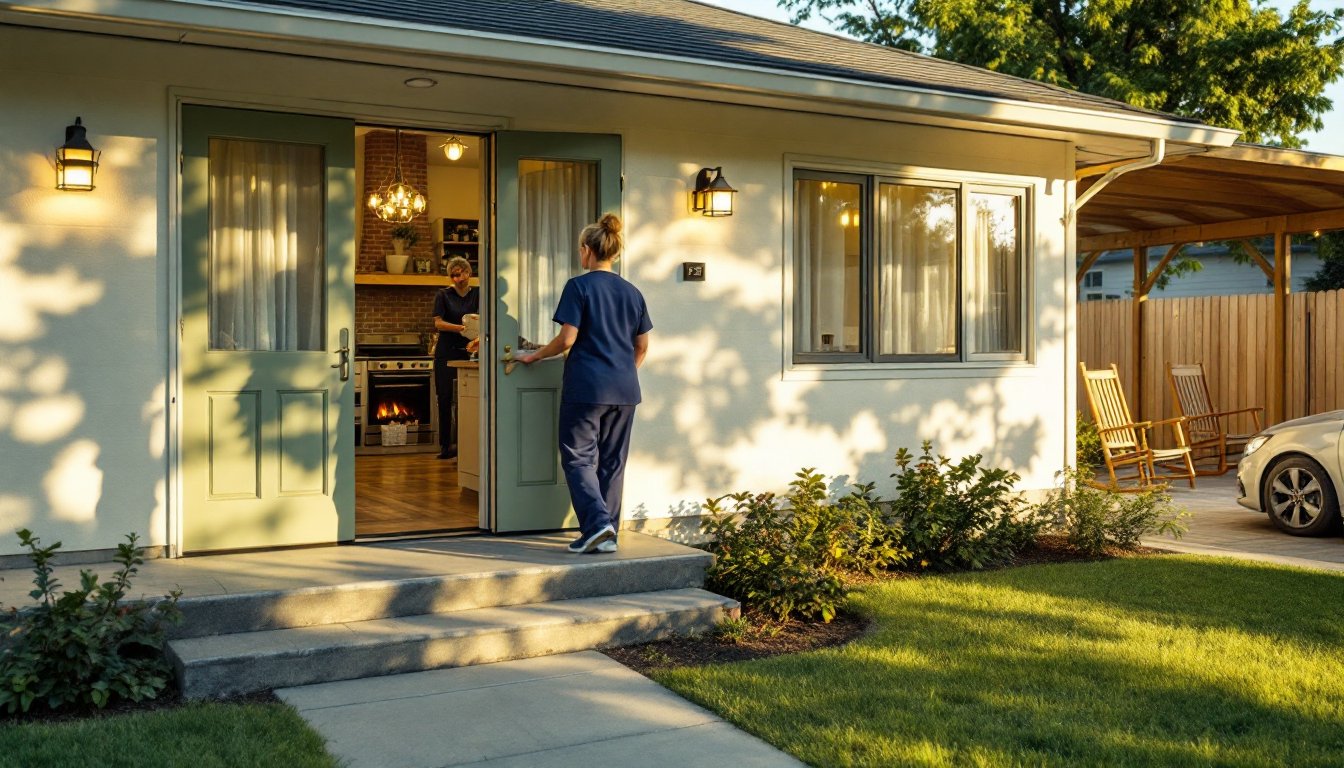
Unlike nursing facilities, small group homes maintain residential architecture: kitchens, living rooms, private or semi-private bedrooms, and outdoor spaces. The goal is to reduce confusion by preserving domestic routines, residents may help set tables, fold laundry, or sit in a kitchen while meals are prepared.
Most states require these homes to meet specific licensing standards that bridge residential and commercial codes. Expect requirements for:
- Fire suppression systems (residential sprinklers, often NFPA 13D or 13R)
- Egress modifications (wider doorways, accessible exits)
- ADA-compliant bathrooms (grab bars, roll-in showers)
- Secure perimeters (fencing, door alarms)
You’ll need to check with your local building department and state licensing board before starting modifications. Many jurisdictions classify these as “residential care facilities” or “adult family homes,” which triggers inspections and occupancy permits separate from standard residential use.
Key Design Features That Make a Home Dementia-Friendly
Dementia-friendly design isn’t about adding features, it’s about eliminating triggers for confusion, wandering, and falls. Two principles guide every decision: visual clarity and simplified wayfinding.
Safety Modifications and Home Adaptations
Start with hazard removal. Dementia patients struggle with depth perception, contrast recognition, and impulse control. Small changes have outsized impact:
Flooring:
- Replace glossy tile or dark-to-light transitions. High-contrast flooring patterns can look like holes or steps, causing hesitation or falls.
- Use matte-finish vinyl plank or low-pile carpet in a single, mid-tone color throughout common areas. Avoid busy patterns.
- Transition strips between rooms should be flush-mounted (no lips over 1/4″) and color-matched to flooring.
Lighting:
- Install daylight-spectrum LED bulbs (5000K–6500K) throughout. Poor lighting increases confusion and “sundowning” agitation.
- Eliminate shadows with evenly distributed ceiling fixtures. Avoid floor lamps (tripping hazard).
- Add motion-sensor night lights in hallways and bathrooms, hardwired units are safer than plug-ins.
Door and Window Security:
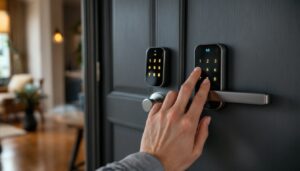
- Install keyed deadbolts or keypad locks on exterior doors, placed high (60″ from floor) to reduce impulsive exits.
- Add door alarms (battery-powered chime units work, but hardwired systems tied to a central panel are more reliable).
- Apply frosted window film or curtains on doors to obscure outdoor views that trigger exit-seeking. Some patients become fixated on leaving when they see cars or passersby.
- Camouflage exit doors by painting them the same color as walls. Remove or relocate coat racks and shoe storage that signal “leaving.”
Bathroom Modifications:
- Replace tubs with curbless roll-in showers (minimum 36″ x 36″). Use slip-resistant tile (DCOF rating ≥0.42).
- Install blocking (2×6 or 2×8 lumber) behind drywall during construction to support grab bars. Retrofit bars must hit studs or use toggle bolts rated for 500 lbs.
- Swap standard toilets for comfort-height models (17″–19″ seat height) with elongated bowls. Add grab bars on both sides.
- Use lever-handle faucets with anti-scald valves (ASSE 1016 certified) set to max 120°F.
- Remove locks from bathroom doors or replace with thumb-turn models that can be opened from outside with a coin.
Kitchen Safety:
- If residents have kitchen access, install stove knob covers or an automatic shut-off device (some models use timers: others detect unattended cooking).
- Secure cabinets containing cleaning supplies, knives, and medications with childproof magnetic locks.
- Modern smart home safety monitors can detect stove use, water leaks, or open doors, sending alerts to caregivers.
Layout and Flow Considerations
Open sightlines reduce anxiety. Residents feel safer when they can see caregivers and orient to familiar spaces.
Living Areas:
- Remove non-load-bearing walls between kitchen, dining, and living rooms to create a single great-room layout. This allows one caregiver to supervise multiple residents.
- If walls must stay, add interior windows (tempered glass) or pass-throughs for visibility.
- Furniture placement matters: arrange seating in clusters (not rows) facing a central point, typically a TV or fireplace. Avoid seating that faces blank walls or windows.
Hallways and Circulation:
- Widen hallways to 42″–48″ minimum if residents use walkers or wheelchairs. (Standard residential halls are 36″.)
- Paint bedroom doors in distinct, high-contrast colors (not just numbers). Pair with large, simple labels: “Mary’s Room” with a personal photo.
- Avoid long, dead-end corridors. If possible, create circular walking paths (loop layouts reduce pacing and exit-seeking behavior).
Outdoor Spaces:
- Enclose yards with 6′ privacy fencing (vinyl, wood, or metal, must meet local code). Gates need keyed locks.
- Design walking paths that loop back to the house. Use pavers or concrete (avoid gravel or mulch, which can be uneven).
- Add covered patios with outdoor seating. Natural light and fresh air reduce agitation, but direct sun exposure needs shade structures.
- Some modern home designs incorporate secure courtyards that bring natural light into central living spaces while maintaining perimeter security.
Converting or Designing a Home for Small Group Dementia Care
If you’re retrofitting an existing home, start with a pre-design inspection by a licensed contractor familiar with care facility conversions. Most single-family homes need structural, plumbing, and electrical upgrades to meet licensing requirements.
Zoning and Permits:
- Verify zoning allows residential care use. Some jurisdictions restrict group homes in single-family zones: others allow them as “conditional use.”
- Expect to file for a change of occupancy permit (moving from R-3 residential to R-4 care facility classification under IRC).
- Budget 3–6 months for plan review and inspections.
Structural and Fire Safety Upgrades:
- Install a residential fire sprinkler system (NFPA 13D for homes under 4,000 sq ft). Retrofit costs run $5–$10 per square foot, depending on existing plumbing access.
- Add hardwired smoke detectors in every bedroom and hallway (interconnected units required).
- Some jurisdictions require a fire-rated corridor (1-hour walls and 20-minute doors) between bedrooms and living areas. Check local amendments to IRC.
- Replace hollow-core bedroom doors with solid-core or 20-minute fire-rated doors (1-3/4″ thick).
Bedroom Requirements:
- Minimum 70–80 sq ft per resident in shared rooms, 100 sq ft in private rooms (varies by state).
- Each bedroom needs an egress window (minimum 5.7 sq ft opening, 24″ high, 20″ wide, sill max 44″ from floor per IRC).
- Add blocking for wall-mounted bed rails or assist bars if residents need transfer help.
Plumbing and HVAC:
- Install at least one accessible bathroom per 4–6 residents (1:4 ratio common in licensing regs).
- Upgrade water heater capacity, group homes typically need 50–75 gallons minimum (factor in showers, laundry, kitchen).
- Add HEPA filtration to HVAC if feasible. Dementia patients are often sensitive to odors and airborne irritants.
Electrical and Lighting:
- Upgrade service panel if adding appliances, medical equipment, or electric heating. Many older homes have 100-amp service: care homes often need 200-amp.
- Run dedicated circuits for kitchen equipment, laundry, and critical medical devices.
- Install GFCIs in all bathrooms, kitchen, laundry, and exterior outlets (NEC requirement).
- Consider a backup generator or battery system for medical equipment and refrigeration. Some states require emergency power for nighttime lighting.
New Construction vs. Retrofit:
Building from scratch costs $200–$300 per square foot in most regions (2026 estimates), but you’ll meet all codes without workarounds. Retrofits run $100–$200 per sq ft depending on how much you’re changing. If the existing home has narrow hallways, small bathrooms, or limited bedrooms, new construction may be more cost-effective.
Hiring a design-build firm experienced in care facilities can streamline permitting. They’ll coordinate with architects, engineers, and licensing consultants to avoid costly revisions.
For homes integrating technology, many smart home systems now offer caregiver-focused features like fall detection, door sensors, and remote monitoring that comply with privacy regulations.
Benefits of the Small Group Home Model for Dementia Patients
Small group homes outperform large facilities in resident outcomes, research consistently shows lower rates of agitation, medication use, and behavioral incidents in homelike settings.
Familiarity and Routine:
Domestic environments, kitchens, dining tables, living room furniture, trigger long-term memories and support orientation. Residents participate in daily routines (folding laundry, setting tables) that feel purposeful, reducing the sense of displacement common in institutional care.
Lower Sensory Overload:
Large facilities expose residents to dozens of unfamiliar faces, loudspeaker announcements, and clinical lighting. Small homes limit social groups to 4–10 people, allowing residents to recognize housemates and form relationships. Noise levels stay manageable.
Personalized Care:
Staffing ratios in small homes (typically 1:3 or 1:4) allow caregivers to learn individual preferences, sleep schedules, food aversions, communication patterns. This continuity reduces frustration and improves cooperation with care tasks.
Family Integration:
Residential settings feel less intimidating to visitors. Families can share meals, watch TV, or sit in a backyard, activities difficult in facility common rooms. Some homes allow families to help with cooking or activities, maintaining caregiver roles.
Cost Considerations:
Small group homes often cost less than large memory care units ($4,000–$7,000/month vs. $6,000–$10,000/month, regional averages). Lower overhead and homelike staffing models keep fees competitive while maintaining quality.
From a development perspective, small homes fill a niche in communities without large care facilities. Zoning allows residential-scale projects in neighborhoods where commercial healthcare buildings wouldn’t be approved, increasing access to dementia care in suburban and rural areas.
Conclusion
Creating a small group home for dementia care requires more than cosmetic updates, it’s a full building-science project involving code compliance, accessibility, and thoughtful design. Start with local licensing requirements and budget for structural, fire safety, and accessibility upgrades. The payoff is a living environment that genuinely supports residents’ dignity and safety without feeling institutional.